
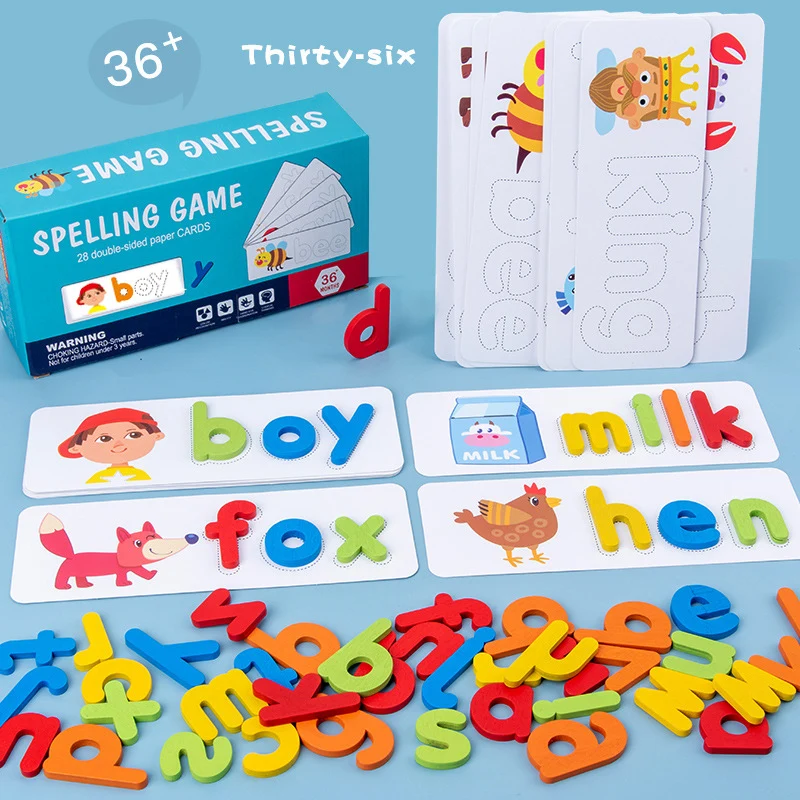
Wooden Spelling Game Puzzle: Build Picture Words with Loose Letters
Style
| Brand | Wonder Kids Toy |
|---|---|
| SKU | SU00064719-C- Spell Words-Game -0.32kg |
| Type | Language Learning Toys |
| Variants | 1 |
A closer look at play
Give a familiar picture a word of its own.
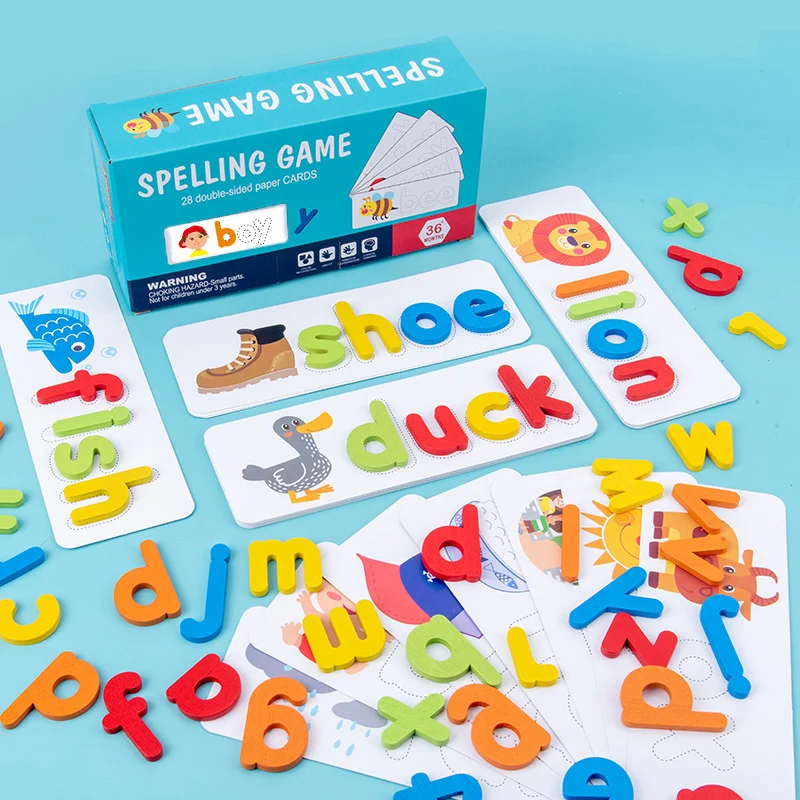
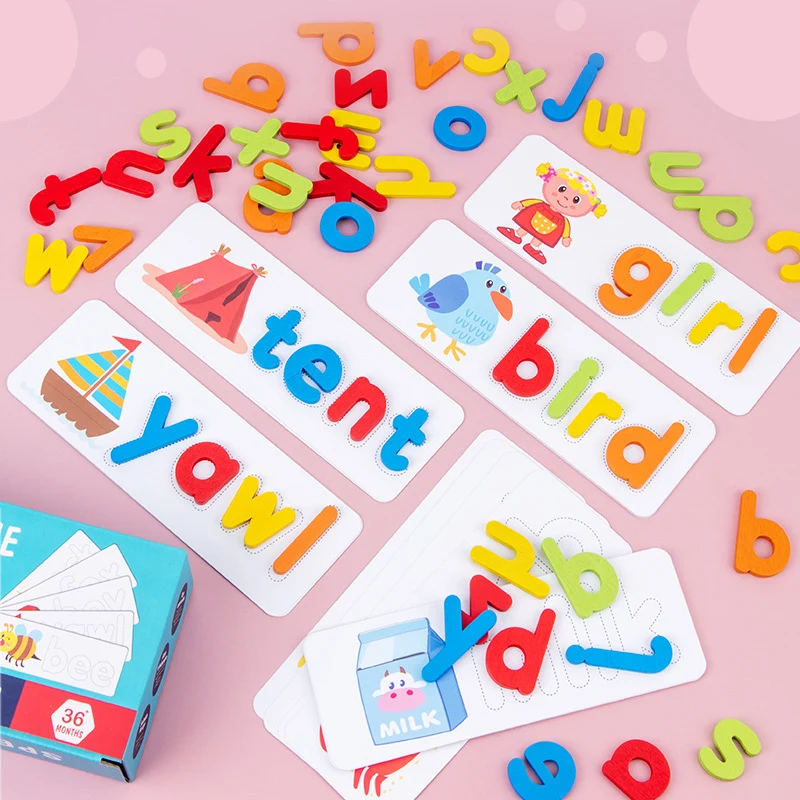
A shoe, a duck, a sock or a cake can start a spelling conversation. This wooden spelling game pairs pictured word models with loose lowercase letters, so an adult and child can build a word together rather than begin with a blank page. Choose one familiar picture, say its name and look closely at the letters printed beside it. The aim of a first session can be as small as finding the beginning of one word.
Let the picture come before the spelling
Choose a card whose picture the child recognises. Talk about it briefly before arranging any letters: where might they see that object, or what might they do with it? That gives the printed word a meaning within the conversation. Then point to the model and read the whole word together. A child does not need to guess every letter independently to take part.
Set out the letters needed for that example if you can identify them in the supplied collection. Ask the child to find the first visible letter and place it where the word will begin. Continue along the model one position at a time. Matching a letter shape, naming a letter and reading a word are related but different activities; choose which one you want to practise rather than demanding all three at once.
Build, compare and make one thoughtful change
After arranging a word, compare it with the card from beginning to end. Point to corresponding positions and notice whether the shapes appear in the same order. If a letter is reversed or in a different place, invite the child to turn or move it. The loose pieces make it possible to revise the arrangement without erasing a page or starting a whole activity again.
For a second round, remove one letter from the completed word and ask what would restore the model. Keep the card visible so the child has something to consult. This missing-letter game is a suggested way to use the pictured materials, not a promise that the box contains graded lessons. Return the letter and read the word again to connect the small change with the complete example.
Notice useful patterns without forcing a rule
When two supplied cards share a visible letter, place them side by side and compare that part of their words. The same letter may appear at the beginning of one word and elsewhere in another. Let the child point out what looks alike before discussing sounds. English spelling does not always map one letter to one sound, so an adult should guide any pronunciation explanation rather than inventing a rule from the picture alone.
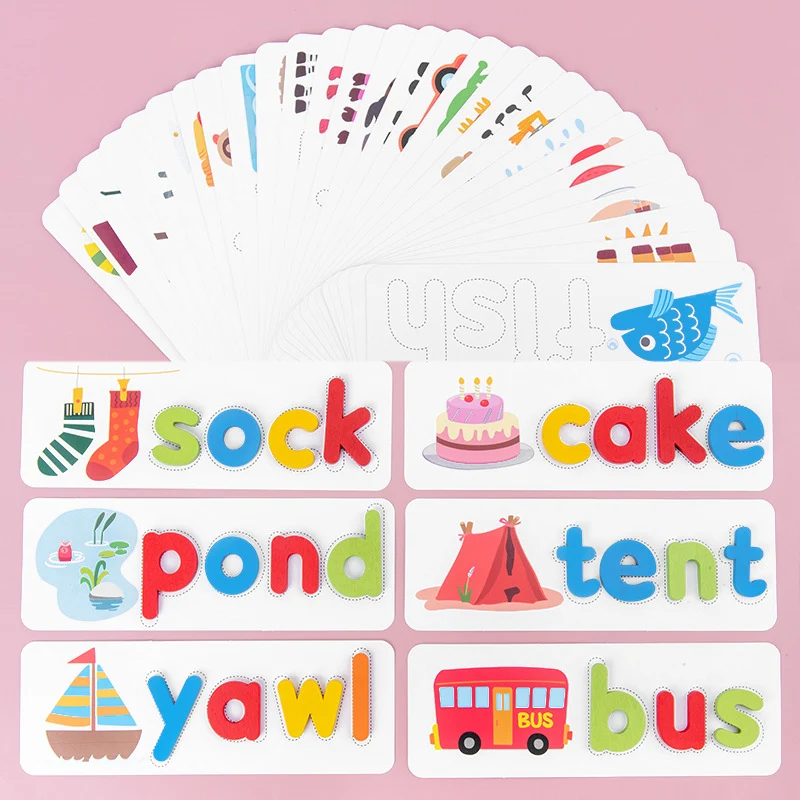
The gallery includes examples such as shoe, duck, sock and cake. These are not all the same phonics pattern, and the set is not presented here as a complete CVC programme. Use the actual cards as word models and select an example appropriate to the learner. The value of the activity is the shared comparison, not finishing every pictured word in one sitting.
Know the format before choosing
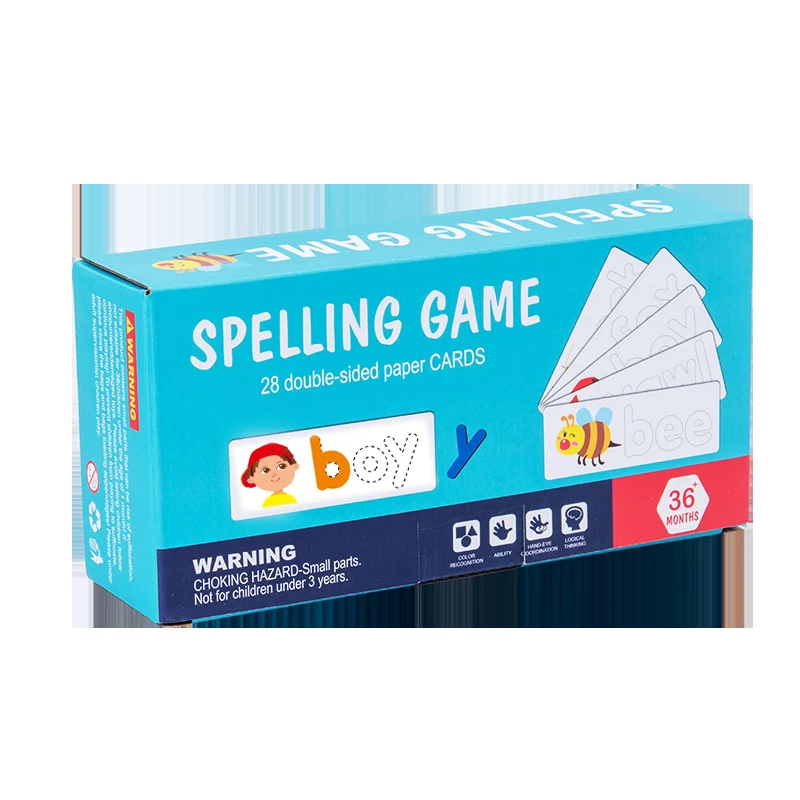
Wooden Word-Building Game is the single listed option. The gallery shows colourful lowercase letter pieces and picture-word cards. An exact card count and a complete inventory of letter pieces are not established, so this description does not promise a particular number of duplicate letters or a separate full alphabet set. Check the selected product contents rather than assuming every gallery example is supplied several times.
This is a physical letter-arranging activity, not an electronic reading device. The described play uses the cards and loose letters; no sound playback, automatic correction or app-based lesson is established. An adult supplies the spoken model and encouragement. It may suit a family looking for hands-on spelling practice rather than a toy that reads each answer aloud.
Make the session easy to return to
A small selection can be more manageable than an entire pile of letters. Put one card in front of the child and leave unrelated pieces to the side. After the word is built, let the child choose whether to repeat it, switch cards or stop. The same familiar example can be revisited on another day without turning the activity into a speed challenge.
Contain the loose pieces, inspect their surfaces and follow the supplied age guidance. A verified numerical age range and a cleaning method are not provided in the current listing, so neither is invented here. Keep small pieces away from children who mouth objects, as the existing supervised-use guidance requires. Do not assume wooden letters can be soaked or washed.
A gift with a clear shared activity
For a learning-focused gift, the useful question is whether the recipient enjoys pictures, letters and working beside an adult. This game offers a concrete starting point: choose a familiar card and build its word. It is not a guarantee of reading progress or a substitute for instruction matched to the child.
Choose the Wooden Word-Building Game option if you want movable letters and visible word models for short shared sessions. Once a word is finished, ask the child to show you one letter they noticed. That small explanation can be a satisfying ending, without needing a score or a new stack of cards.
Commonly Asked Questions by Parents
What is the main activity?Arrange loose lowercase letters to match a word shown on a picture card. An adult can name the picture, read the model and help the child compare the letters in order.
Which option is available?The current selector lists Wooden Word-Building Game. It is one word-building option rather than a menu of separate language or electronic versions.
What examples appear in the gallery?Shoe, duck, sock and cake are among the pictured examples. These illustrate the format; they are not a verified complete inventory of every card in the package.
Are the letters lowercase?The gallery shows colourful lowercase letter pieces. A complete alphabet-piece inventory, including the quantity of repeated letters, is not independently established.
How many cards are included?An exact card count is not verified in the current listing. Do not infer a total from the number of examples displayed across promotional photographs.
Does the toy read the words aloud?No audio-reading function is established. The described activity is physical letter arrangement, with an adult providing pronunciation and discussion where needed.
Is this a complete phonics course?No. The listed materials support picture-word matching and spelling activities, but no complete curriculum, lesson sequence or guaranteed reading outcome is promised.
Can a beginner copy the model?Yes. Keeping the card visible and matching one letter position at a time is a suggested starting activity. Independent recall does not have to be the first goal.
What can we do after building a word?Compare the arrangement with the card, then remove one letter and ask which piece would restore it. Keep the model visible if the learner benefits from a reference.
Can we compare two words?When supplied cards share a letter, compare its position and shape. An adult should guide sound explanations because the pictured words do not all follow one simple phonics pattern.
What age is it suitable for?A verified numerical age range is not stated here. Follow the selected package’s age guidance and warnings, especially because the activity uses loose small letter pieces.
How should we look after the pieces?Contain the letters and inspect their surfaces before supervised use. A specific cleaning method is not verified; follow supplied care directions rather than assuming wooden pieces are washable.
What should I check before buying?Confirm that the picture-word and loose-letter format matches the intended activity. If exact card totals or duplicate-letter quantities matter, obtain those details before ordering.
Continue exploring
Reading & Phonics Toys for Kids: CVC Words, Spelling & Alphabet
Questions about this product
Is Wooden Spelling Game Puzzle: Build Picture Words with Loose Letters in stock?
Yes — 3 units are available and ready to ship from our US warehouse.
How fast will Wooden Spelling Game Puzzle: Build Picture Words with Loose Letters ship?
Orders placed before 3:00 PM ET ship the same business day. Delivery takes 3–5 business days inside the USA.
Where does Wooden Spelling Game Puzzle: Build Picture Words with Loose Letters ship from?
It ships from the United States. Standard delivery is 3–5 business days, and orders placed before 3:00 PM ET go out the same day.